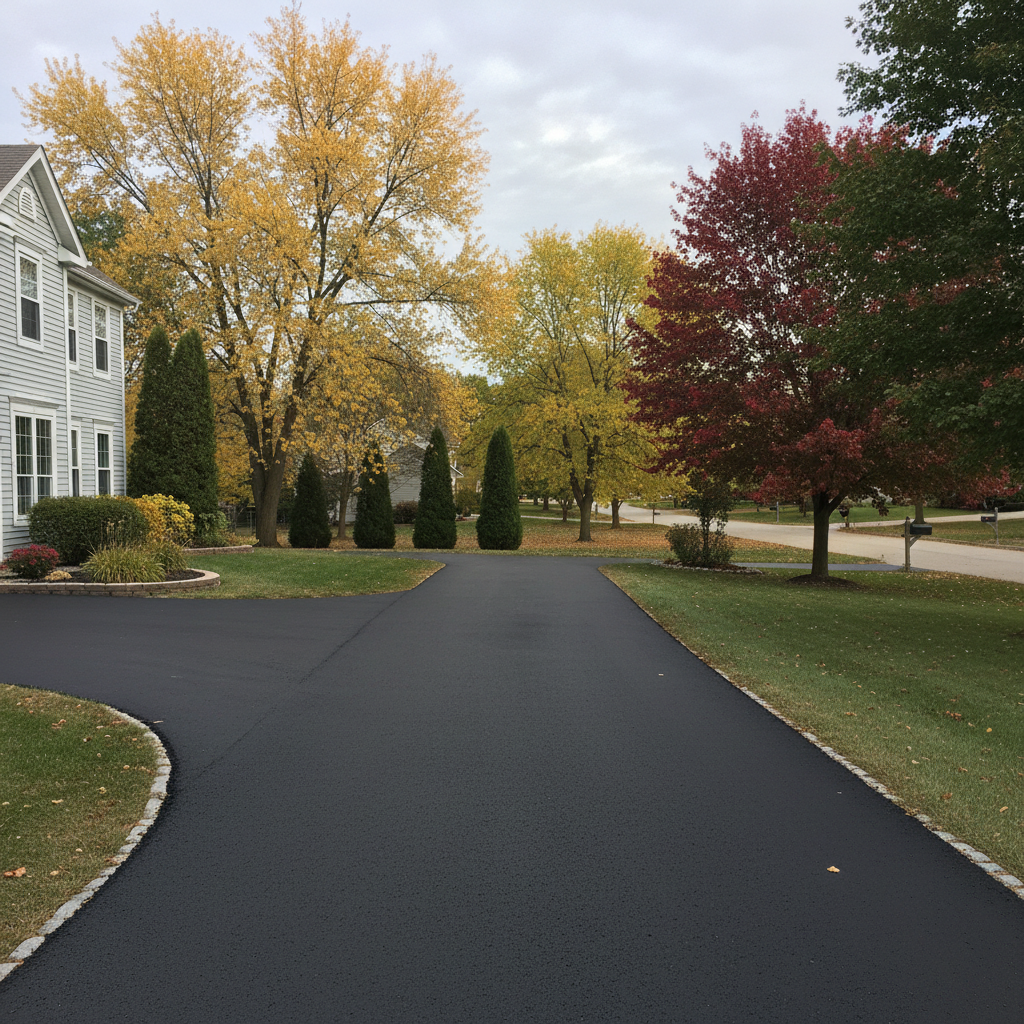
Ever wonder why your asphalt driveway seems to age faster than you'd like? It's not just heavy vehicles doing the damage; a lot of it comes down to our wild Indiana weather. Here in Granger, we get the full spectrum – freezing winters, wet springs, hot summers, and everything in between. That constant shift really puts stress on your pavement, doesn't it?
Timing Your Paving Project Right
So, when's the best time to get new asphalt laid down or a major resurfacing done? You'd think summer, right? Not always. While we definitely need warm temperatures, scorching hot days can actually be too much of a good thing. The sweet spot for laying asphalt, especially for a new driveway or a significant overlay, is usually late spring to early summer, or then again in early fall.
Why those times, you ask? We're looking for consistent temperatures, typically between 50 and 85 degrees Fahrenheit. This allows the asphalt mix to be laid and compacted properly before it cools too quickly or stays too hot and soft for too long. If it's too cold, the asphalt can harden before we can compact it right, leading to a weaker, more brittle surface. Too hot, and it becomes difficult to work with and might not cure correctly, which can cause issues down the road.
Another thing I always look for is dry conditions. We simply can't pave on wet ground, plain and simple. Moisture underneath the asphalt will cause problems later, like cracking and potholes, because the base just isn't stable. That's why those stretches of dry, mild weather we get in May, June, September, and early October are gold for us at Paradise Asphalt Co. It gives the sub-base time to dry out completely before we even think about bringing in the hot mix.
Weather Conditions That Affect the Work
Beyond just temperature, several weather factors play a big role in how well your new driveway turns out:
- Rain: This is a non-starter. If it's raining or has rained recently and the ground is saturated, we can't pave. The asphalt won't bond correctly, and the base will be compromised. We'll always reschedule if rain is in the forecast.
- Humidity: High humidity isn't as critical as rain, but it can affect how quickly the asphalt cools and cures. We factor it into our planning, though it's usually manageable.
- Wind: Strong winds can cool the asphalt mix down too fast, making it harder to work with and compact properly. It can also blow debris onto the fresh asphalt, which nobody wants.
- Ground Temperature: This one often gets overlooked. Even if the air temperature is good, if the ground is still frozen from winter, it's not ideal. The cold ground can cause the asphalt to cool too rapidly from the bottom up, affecting compaction and bonding. This is especially true for those areas in Granger, like some of the older subdivisions around Capital Avenue, where the soil can hold moisture and cold for a while.
We're constantly checking forecasts, not just for the day of the job, but for the days leading up to it. It's all about setting your driveway up for success from the ground up.
Protecting Your Driveway Investment Year-Round
Once you've got that beautiful, smooth blacktop, you want it to last. Here's what you can do:
- Sealcoating: Think of this as your driveway's sunscreen and rain jacket. I recommend sealcoating every 2-3 years, depending on traffic and sun exposure. It protects against UV rays, water penetration, and even minor chemical spills. It's a small investment that really adds years to your driveway's life.
- Crack Sealing: As soon as you see a crack, get it sealed. Water is asphalt's worst enemy. When water gets into cracks, especially during our Granger winters, it freezes, expands, and turns small cracks into big potholes. Sealing them early is cheap insurance, believe me.
- Keep it Clean: Don't let oil or gas spills sit. They break down the asphalt binder. Clean them up quickly. Also, sweep off dirt and debris regularly, especially before winter.
- Mind the Edges: The edges of your driveway are often the weakest points. Avoid driving heavy vehicles right on the edge. If you have a gravel shoulder, keep it built up to support the asphalt edge.
- Snow Removal: Be careful with plows and shovels. Don't dig into the asphalt. Using a plastic-edged shovel or setting your snowblower just above the surface can prevent gouges. Avoid using de-icing salts excessively; while they're fine in moderation, some can be harsh on asphalt over time.
Taking these steps throughout the year will make a huge difference in how long your driveway holds up. It's not just about the initial paving; it's about consistent care. A well-maintained driveway isn't just about curb appeal; it's about protecting your property and avoiding costly repairs down the line. If you've got questions about your specific driveway or need some work done, give us a call. We're here to help.